A heat exchanger transfers heat from one fluid to another without usually mixing them. It is widely used for heating and cooling in industrial systems. Understanding the working of heat exchanger helps businesses choose suitable equipment for their process needs. It also improves process efficiency and energy utilization. Proper selection can reduce operating costs and enhance system performance.
A heat exchanger is equipment that transfers thermal energy between two fluids at different temperatures. The hot fluid releases heat while the cold fluid absorbs it through a heat transfer surface. Both fluids usually move through separate passages. This allows industries to control temperature while keeping the fluids apart.
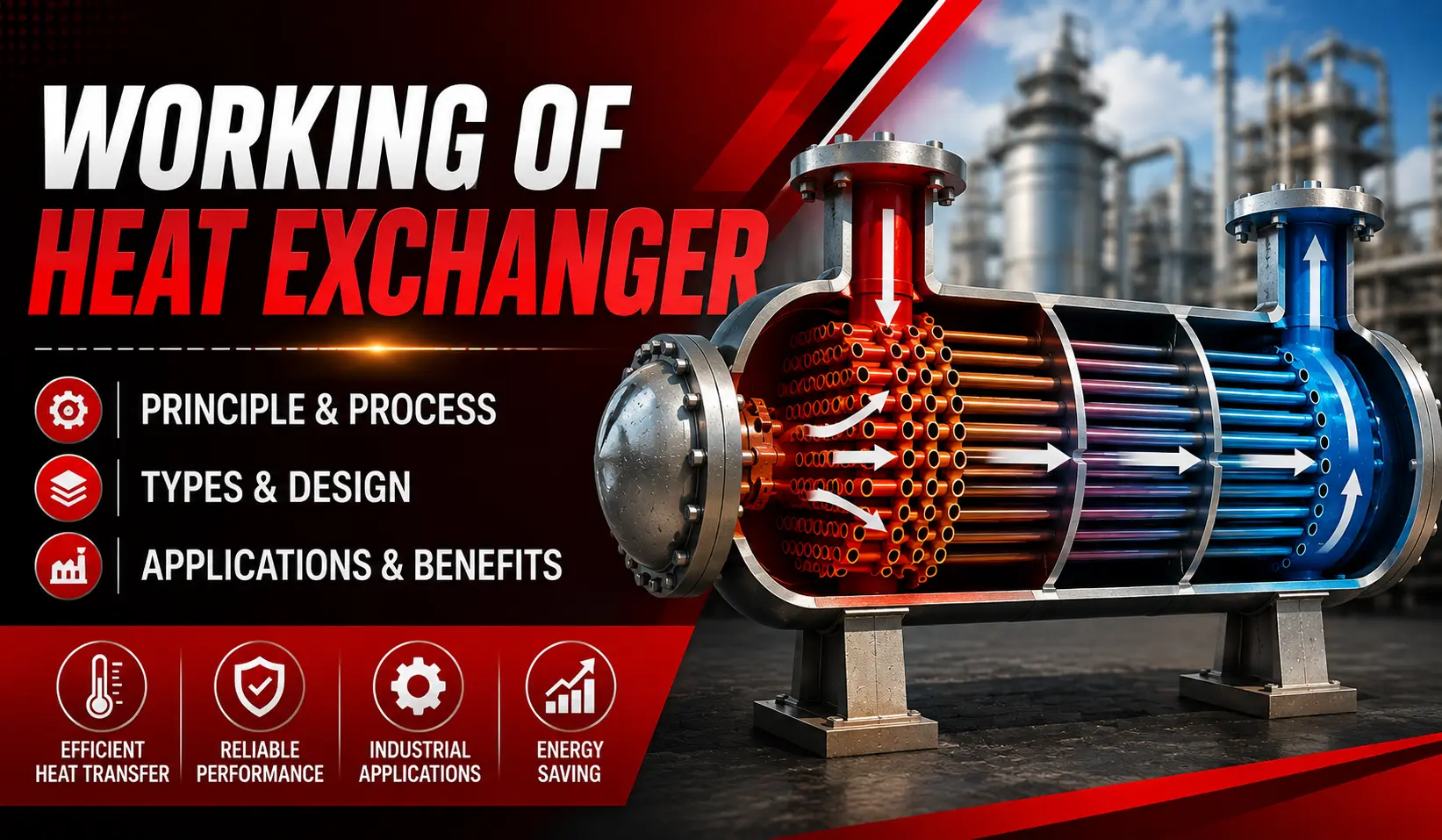
The heat exchanger working principle is based on temperature difference. Heat naturally moves from a hotter fluid toward a colder fluid. The heat passes through a conductive surface that separates the two fluids. As the process continues the hot fluid loses thermal energy while the cold fluid gains it.
The working of heat exchanger follows a simple process. Hot and cold fluids enter separate passages inside the equipment. They move through their respective flow paths while a heat transfer surface separates them. Thermal energy moves from the hot side to the cold side. The cold fluid absorbs heat while the hot fluid releases it. Both fluids then leave at the required outlet temperature.
Different processes need different heat exchanger designs. Shell and tube heat exchangers are widely used in industrial applications. Plate heat exchangers provide a compact design with effective heat transfer. Double pipe heat exchangers work well for simpler heating and cooling duties. Air-cooled heat exchangers use air to remove heat from process fluids. if you wanto know more about types of heat exchangers, you can visit our dedicated guide for more information.
| Heat Exchanger Type | Common Application |
|---|---|
| Shell and Tube | Chemical and heavy industries |
| Plate | HVAC and process systems |
| Double Pipe | Heating and cooling duties |
| Air Cooled | Industrial fluid cooling |
Heat exchangers are used in chemical processing and oil and gas operations. They are also common in power generation and HVAC systems. Food processing and pharmaceutical industries also depend on heat transfer equipment. Heat exchangers help maintain process temperatures and can support energy recovery.
MD HeatEx provides heat transfer solutions for industrial applications. Each process has its own operating requirements. That's why - equipment should be selected based on actual process conditions. A suitable design can support reliable heat transfer and consistent performance over long operating periods.
The working of heat exchanger is based on transferring thermal energy from a hot fluid to a cold fluid through a separating surface. Different designs serve different industrial needs. Choosing equipment based on temperature and pressure requirements helps maintain reliable heat transfer and stable process performance.